In This Guide
So you're curious about that flash of brilliant blue in your backyard or the local woods. I get it. For years, I just assumed Blue Jays were, well, painted with blue pigment like a child's drawing. Turns out, I was completely wrong, and the real story is so much cooler. The Blue Jay color is one of nature's greatest magic tricks, and once you understand how it works, you'll never look at these birds (or color itself) the same way again.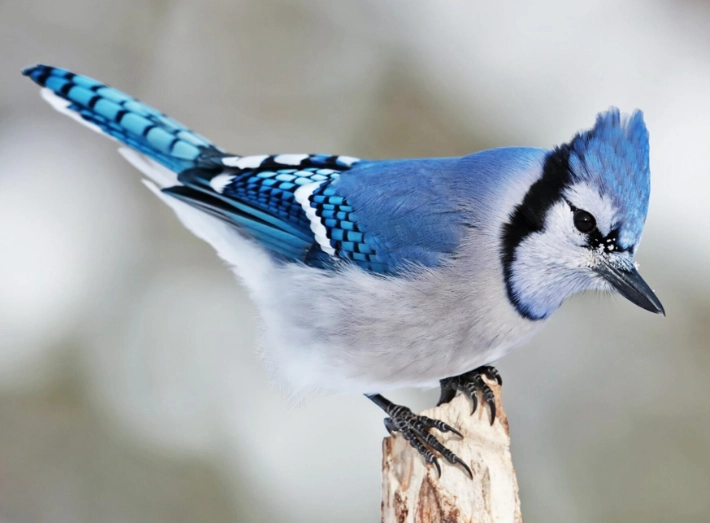
Let's ditch the dry textbook approach. I want to walk you through this like I'm explaining it to a friend over coffee. We'll talk about the science that'll blow your mind, the myths people get wrong, what that stunning blue jay feather color actually means in different cultures, and most importantly, how you can best see and appreciate it for yourself. This isn't just trivia; it changes how you observe the natural world.
Here's the kicker right at the start: Blue Jays are not blue. Not in the way a strawberry is red or a lemon is yellow. There is zero blue pigment in their feathers. The color you see is a complete illusion—a spectacular feat of structural engineering at a microscopic level. This fact alone makes the blue jay's color a fascinating topic for anyone interested in birds, physics, or just beautiful things.
The Shocking Truth: Blue Jays Aren't Actually Blue!
This is where most online articles just state the fact and move on. But let's really unpack it, because it's the core of everything. If there's no blue paint, how do we see blue? The answer lies in something called structural coloration.
Imagine the feather's tiny barbules (the even tinier branches off the main feather branches) are built like a complex, layered crystal or a very precise sponge. These structures are made of keratin—the same stuff as your hair and nails—and they're arranged in a way that scatters light. Specifically, they scatter shorter wavelengths of light (blue and violet) in all directions, while absorbing the longer wavelengths (red, orange, yellow).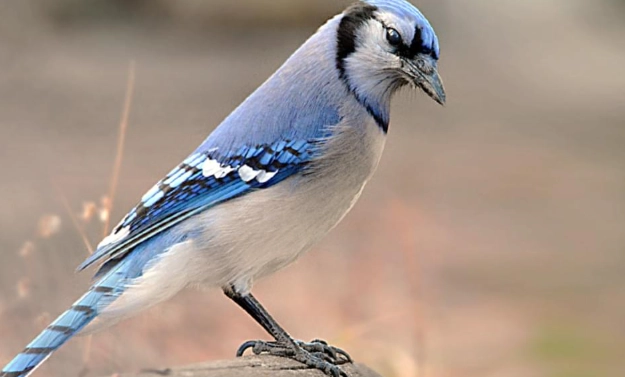
Structural Color: How It Works (The Simple Version)
Think of it like the sky. The sky isn't a big blue dome; it's blue because air molecules scatter blue light from the sun more than they scatter red light. A Blue Jay's feather does the same trick, but with nano-scale architecture instead of gas molecules. The Cornell Lab of Ornithology has a great piece on this phenomenon across bird species, confirming it's not unique to jays but is brilliantly displayed by them.
Here’s the practical consequence: the blue color of a Blue Jay is entirely dependent on light and viewing angle.
- In bright, direct light: The blue is vibrant, metallic, almost electric.
- In shadow or dull light: The bird can look surprisingly dull, gray, or even blackish.
- From a different angle: The intensity can shift. That iridescent sheen you sometimes see? That's the angle at work.
I learned this the hard way trying to photograph one. I had a perfect shot lined up in a shaded grove, and the bird looked... boring. Almost like a different species. Then it hopped into a sunbeam, and boom—that iconic blue jay color exploded into view. My camera wasn't broken; I was just seeing physics in action.
The Melanin Backstage
Now, here's another layer. While the structure creates the blue, the feathers have a base of melanin—a dark brown or black pigment. This isn't for show. This melanin background acts like a black theater curtain. It absorbs all the non-scattered light (the reds, yellows, etc.), preventing it from bouncing back and muddying the pure blue scatter. Without this dark background, the blue would be washed out and faint. So the pigment isn't creating the blue, but it's absolutely essential for making it pop. The American Bird Conservancy notes the importance of this combination of structure and pigment in creating avian brilliance.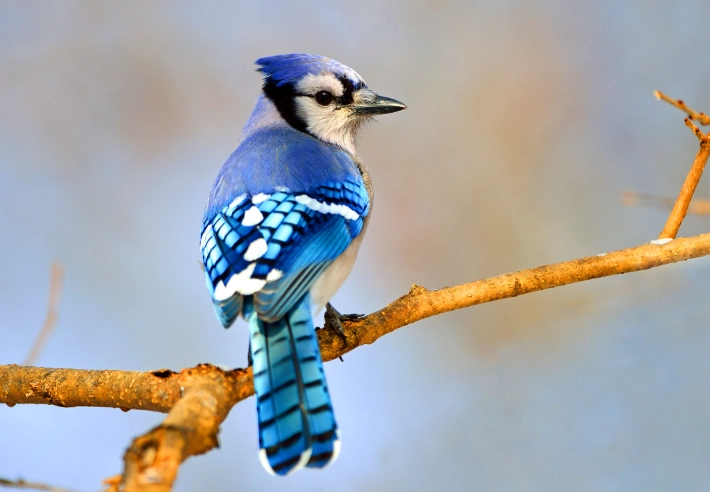
It's a partnership. Structure creates the color, pigment provides the contrast. Genius.
Light and Angle: The Final Actors
This means a Blue Jay's plumage is a dynamic display, not a static paint job. It changes with the time of day, the weather, and your position. This is why preserved specimens in museums often look flat and less vibrant—the light isn't interacting with the structure in a natural way.
So when someone asks, "What color is a Blue Jay?" the most accurate answer is: "It depends. But under the right conditions, it's one of the most stunning blues in nature."
More Than Just a Pretty Color: Symbolism & Cultural Meanings
Humans aren't robots. We attach stories to things we find beautiful or striking. The bold blue jay color meaning has sparked a lot of interpretations, and they vary wildly. It's fun to explore, but take it all with a grain of salt—these are cultural stories, not scientific facts.
In many North American indigenous traditions, Blue Jays are often seen as tricksters, communicators, or symbols of clarity and curiosity. Their loud calls and bold behavior certainly fit the trickster archetype. The bright blue, in some contexts, is linked to the sky, truth, and spiritual communication.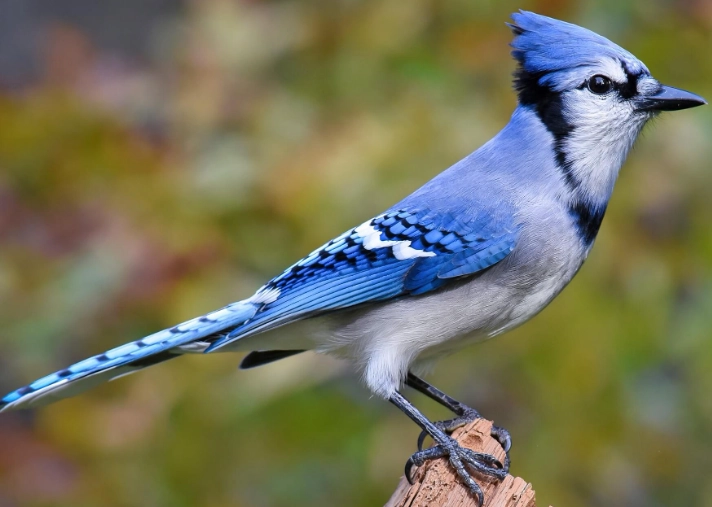
In more modern, generic symbolism (the kind you find on spirituality blogs), blue often gets tied to:
- Communication: Jays are loud and clear with their calls.
- Confidence & Assertiveness: They're not shy birds.
- Vibrancy & Life: That color is hard to ignore.
- Protection: Some folklore claims they warn other animals of danger.
My personal take? I think we sometimes project too much. The bird's color is an evolutionary adaptation, likely for signaling and mate attraction. Assigning deep spiritual meanings feels a bit like putting human words on a bird's feather. But hey, if seeing a flash of blue brightens your day and reminds you to speak your mind, that's a perfectly lovely thing. The meaning is what you find in it.
Seeing (and Photographing) the True Blue Jay Color
This is the practical stuff I wish I'd known earlier. If you want to truly appreciate that famous blue jay feather color, you need to become a lighting director.
Best Conditions for Observation
Forget overcast days if you want the wow factor. Aim for:
- Early to mid-morning light: The sun is at a good angle, bright but not harshly overhead.
- Light coming from behind YOU: This illuminates the bird fully. If the light is behind the bird, it'll be in silhouette.
- Clear or partly cloudy skies: Direct sunlight is your friend here.
Watch how the color dies when the bird flies into the shade of a thick tree. It's a live demonstration of structural color in action.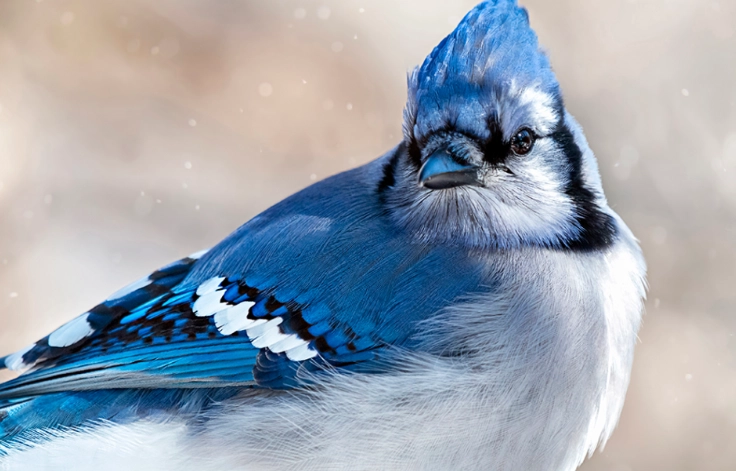
Tips for Photographers & Birders
I've messed up enough shots to give you this advice:
- Expose for the bird, not the background. Your camera's light meter will see all that blue and darken the whole image, making the jay look like a dark blob. Use exposure compensation (+1 or +2 stops) or spot metering.
- Angles matter. Try to get side-lit shots to show off the texture and sheen of the feathers.
- Patience with posture. When a jay puffs up or turns its head, the feather angles shift, changing the color intensity. Wait for that perfect turn.
The goal is to capture that metallic, almost glowing quality that makes the blue jay color so special. It's challenging but incredibly rewarding.
Common Myths & Misconceptions (A Quick Debunking Table)
There's a lot of nonsense out there. Let's clear the air with a quick reference.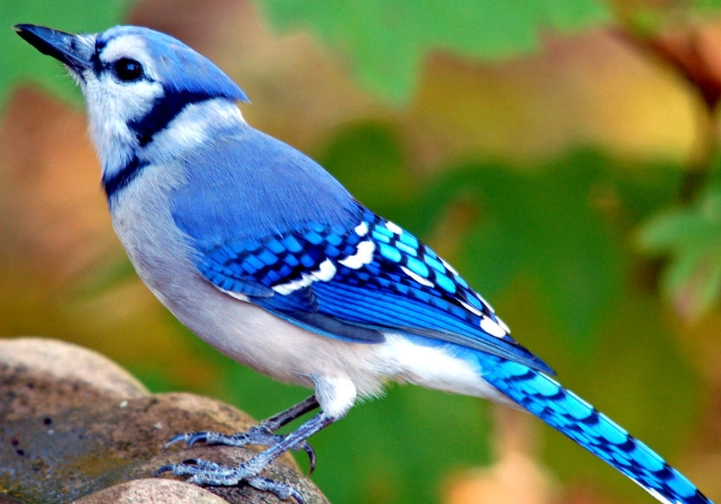
| Myth | Reality | Why It Matters |
|---|---|---|
| Blue Jays have blue pigment. | False. Zero blue pigment. It's 100% structural color. | This is the fundamental fact that changes how you understand the color. |
| You can see "true" blue in any light. | False. The color is light-dependent. In poor light, they look gray. | Explains why the bird seems to change color and helps with observation. |
| A found blue jay feather will stay bright blue forever. | False. Feathers degrade. The intricate structure can collapse, turning the feather a dull gray/brown (the color of the underlying melanin). | Manages expectations if you're collecting feathers. The vibrant blue is fragile. |
| The blue is for camouflage. | Mostly False. A bright blue bird is not camouflaged against green leaves or brown bark. It's likely for signaling (to mates or rivals). | Helps understand the bird's behavior and evolution. |
| All blue in birds works this way. | Mostly True. With very rare exceptions (like the turaco's green pigment), all blue and iridescent colors in birds are structural. This includes Indigo Buntings, Steller's Jays, and even the "blue" in some parrot feathers. | Puts the Blue Jay into a broader, fascinating context of avian biology. The principles are common across species. |
Your Blue Jay Color Questions, Answered
This is the big one. No, they are not blue from pigment. The color is a physical illusion created by the microstructure of their feathers scattering light. So, they appear brilliantly blue to our eyes under the right conditions, which is what counts for us observers, but the mechanism is completely different from how most colors are made.
You're either seeing them in poor light (where the structure can't do its scatter trick), or you're looking at a worn or damaged feather. As the feather barbs break down, the precise structure is lost, revealing the duller melanin pigment underneath. A molting jay can look quite patchy and less vibrant.
Yes, they do. Unlike many birds where males are flashier, Blue Jays are monomorphic in color. Both sexes sport the same stunning blue, white, and black patterning. You can't sex them by plumage alone—you have to observe behavior (like courtship feeding) or, in hand, use subtle size or anatomical clues.
That's a great observation. The iconic white and black barring on the wings and tail, and the bold black "necklace" across the chest, are created by actual pigments (melanin again). This creates a sharp, high-contrast pattern that may be used for signaling, especially in flight. So the bird is a masterpiece combining structural color (the blue) and pigmentary color (the black and white).
The basic principle of structural color is the same for all truly blue birds—Indigo Buntings, Eastern Bluebirds, Steller's Jays. The difference lies in the specifics of the feather nanostructure: the size, shape, and density of the tiny air pockets and keratin rods. These subtle differences are what give each species its unique shade of blue, from the deep navy of a Steller's Jay to the sky-blue of a Bluebird. The Blue Jay's color is known for having a particularly strong, almost cerulean vibrancy with a noticeable sheen.
So there you have it. The blue jay color isn't just a color. It's a lesson in physics, a marvel of evolution, and a daily spectacle that's free to anyone who takes a moment to look closely. Next time you see one, remember: you're not just looking at a blue bird. You're looking at a master illusionist, wearing a cloak of light itself.
Reader Comments