Quick Guide
- The Nuts and Bolts of Bald Eagle Flight
- What Are They Doing Up There? Decoding Bald Eagle Behavior
- The Best Places to See a Bald Eagle in Flight (Beyond the Obvious)
- How to Photograph a Bald Eagle Flying (And Not Mess It Up)
- Your Bald Eagle Flying Questions, Answered
- More Than Just Watching: The Bigger Picture
I remember the first time I saw one. I was hiking near a lake, not really expecting much, just enjoying the quiet. Then, this huge shadow passed over me. I looked up, and there it was—a bald eagle, wings spread wide, just gliding on the air like it owned the sky. I stood there, frozen, and watched it circle higher and higher until it was just a speck. That feeling, that mix of awe and sheer luck, is what I think most of us are chasing. But after that, I got curious. I wanted to see it again, to understand it. And let me tell you, figuring out how to reliably watch a bald eagle flying isn't just about luck. There's a whole world of behavior, timing, and location that goes into it.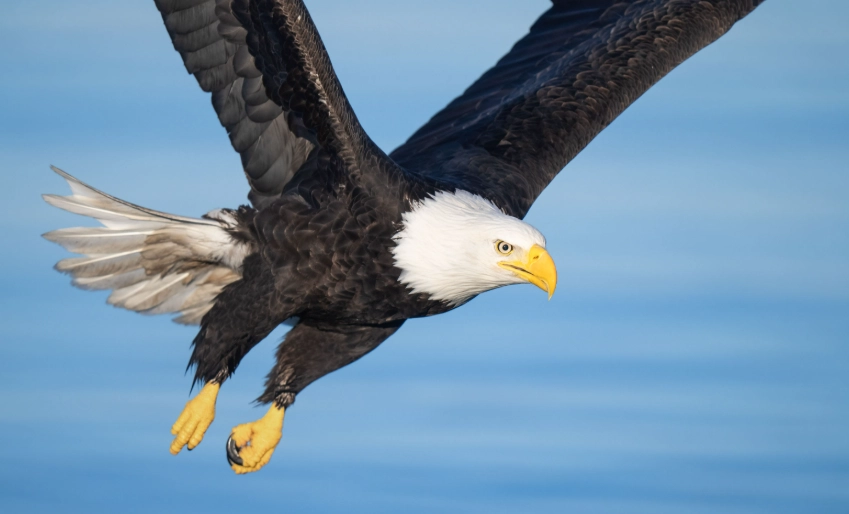
Maybe you've had a glimpse from your car on a highway, or you see them on TV and wonder what the big deal is. Up close, it's a different story. It's power and grace combined. This guide is what I wish I'd had back then. We're not just going to talk about what they look like (you know that). We're going to dig into the how and the why. How do they fly like that? Why do they circle in one spot for hours? Where are the best places, not just the famous ones, to catch this sight? And if you're like me and tried to take a photo with your phone only to get a blurry dot, we'll get into how to actually capture that moment.
The Nuts and Bolts of Bald Eagle Flight
Let's start with the basics, because knowing what you're looking at makes the experience ten times better. A bald eagle soaring isn't just a bird flapping. It's a masterclass in energy efficiency.
Built for the Sky
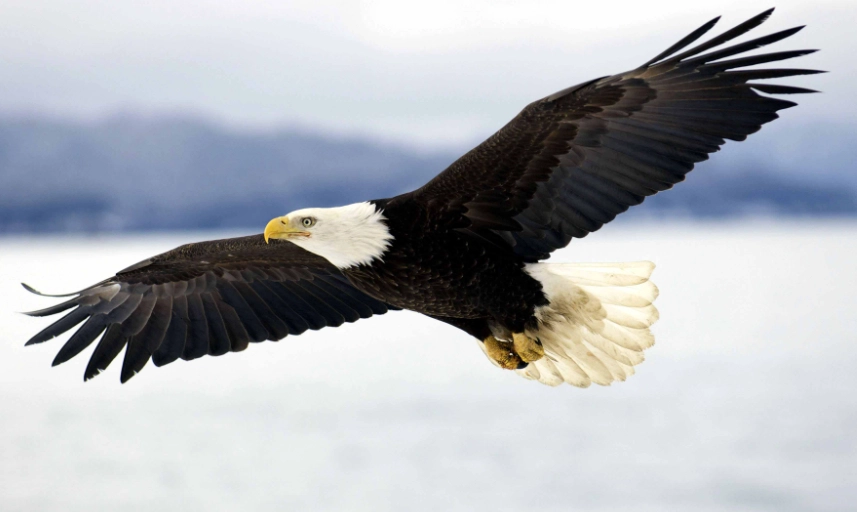
Their wings are long and broad, kind of like a plank. This shape is perfect for catching rising columns of warm air, called thermals. They spread those seven-foot wingspans, lock them in place, and just... rise. It looks effortless because, for them, it mostly is. They can climb thousands of feet without a single wingbeat. When you see a bald eagle flying in wide, lazy circles, it's almost certainly riding a thermal, scanning the ground below with those legendary sharp eyes.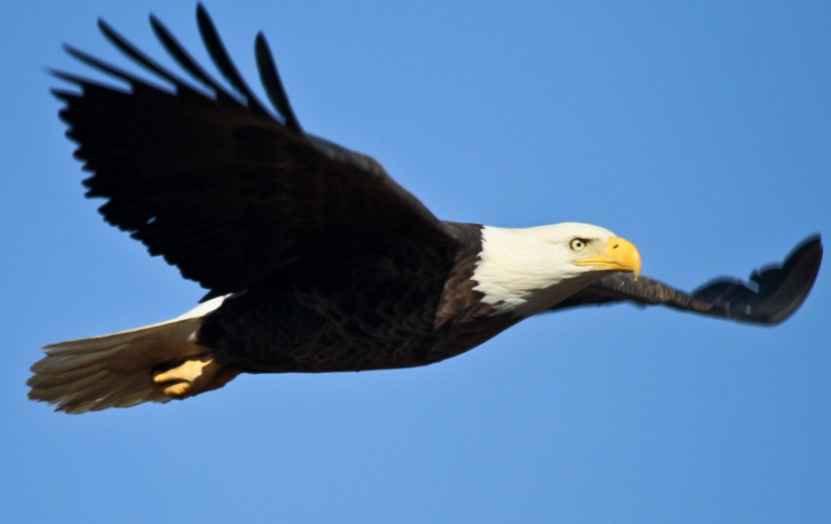
Now, the flap. When they do need to power forward, it's a deep, powerful downstroke. It's not the frantic buzzing of a small bird. It's slow, deliberate, and you can almost hear the whoosh of air if you're close enough. This combination of soaring and occasional powerful flapping lets them cover vast distances without tiring. I've read estimates that they can fly up to 30-35 mph when cruising, and they can hit speeds over 75 mph in a dive (more on that terrifyingly beautiful maneuver later). Their flight altitude can be deceptive. They often soar between a few hundred to a couple thousand feet, but they've been recorded flying at 10,000 feet or more. You're not always going to see a bald eagle flying right above the treetops; sometimes, they're just a distant, majestic cross in the blue.
What Are They Doing Up There? Decoding Bald Eagle Behavior
Okay, so you've spotted one. Great! But what exactly is it doing? Understanding their behavior turns a cool sighting into a fascinating story.
Hunting & Fishing: This is the big one. A bald eagle flying low over water, its head cocked down, is almost always hunting. They're looking for fish near the surface. When they spot one, they might switch from a glide to a hover for a second to pinpoint the target. Then comes the plunge. They tuck their wings in and drop, feet-first, like a feathered missile. Sometimes they completely submerge, coming up with a splash and (hopefully) a fish locked in those massive talons. It's not always successful—I've seen plenty of misses, which is somehow reassuring. They're not perfect. If fishing is good in an area, you might see several bald eagles flying and competing, which can lead to dramatic aerial squabbles.
Soaring & Scouting: High, circling flight is often about surveying their territory. An established pair might do this regularly to check the boundaries. It's also a way to spot potential food sources (like a deer carcass) or threats. This is the most common "picture-perfect" view of a bald eagle flying.
Courtship & Play: In late winter and early spring, watch for pairs. Their courtship can include spectacular aerial displays. They might lock talons high in the air and cartwheel downward, separating at the last moment. It's breathtaking and a little nerve-wracking to watch. Even outside of breeding season, eagles, especially younger ones, engage in what looks like play—chasing each other, diving, and mock-fighting. It's probably practice, but it's incredibly dynamic to observe.
Traveling: Sometimes, they're just going from point A to point B. Their flight path will be more direct, with a mix of soaring and flapping. During migration periods (which isn't as rigid as with some birds—many are year-round residents if food is available), you might see them moving along river valleys or coastlines, using those same thermals to aid their journey.
You see? Once you know the context, a simple sighting becomes a narrative. Is that eagle a hunter, a homeowner, or a hopeful suitor?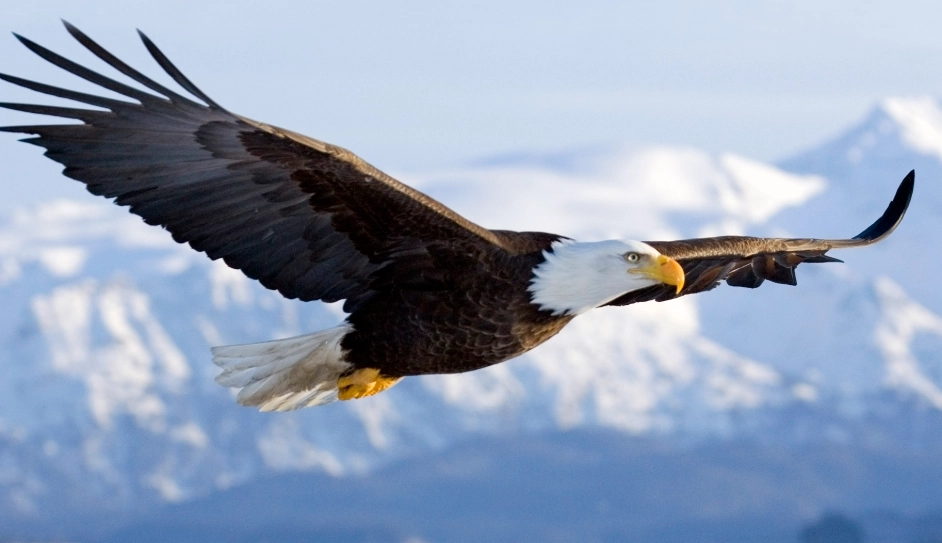
The Best Places to See a Bald Eagle in Flight (Beyond the Obvious)
Everyone knows about Alaska. But you don't need to go to the last frontier. Their recovery has been phenomenal, and they're now found in every U.S. state except Hawaii. The key is habitat: they need large bodies of water (for fishing) and tall, mature trees (for nesting and perching).
Top U.S. Hotspots for Eagle Watching
These places are famous for a reason—high concentrations of eagles, especially in winter when they gather around open water and food sources.
- The Pacific Northwest: The Skagit River in Washington, from November to February, is legendary. Dozens, sometimes hundreds, of bald eagles congregate to feed on spawned-out salmon. The Chilkat River in Alaska is the king of them all, with thousands gathering.
- The Great Lakes & Mississippi River Valley: In winter, locks and dams on the Mississippi, like the one in Keokuk, Iowa, or along the Illinois River, keep water open, attracting fish and eagles. The shores of the Great Lakes, especially around unfrozen areas, are also prime.
- The Chesapeake Bay: This is one of the largest nesting populations on the East Coast. Blackwater National Wildlife Refuge in Maryland is a fantastic year-round spot.
But here's a secret: some of my best sightings have been in less-hyped locations. Look for large reservoirs, major rivers, and even some coastal estuaries in your own region. State fish hatcheries can be magnets in winter. I once saw a juvenile bald eagle flying over a medium-sized lake in Pennsylvania, far from any "official" eagle hotspot. Check with your local Audubon Society chapter or state wildlife agency website. They often have maps of known nest sites (view from a distance, please!) and know the local hangouts.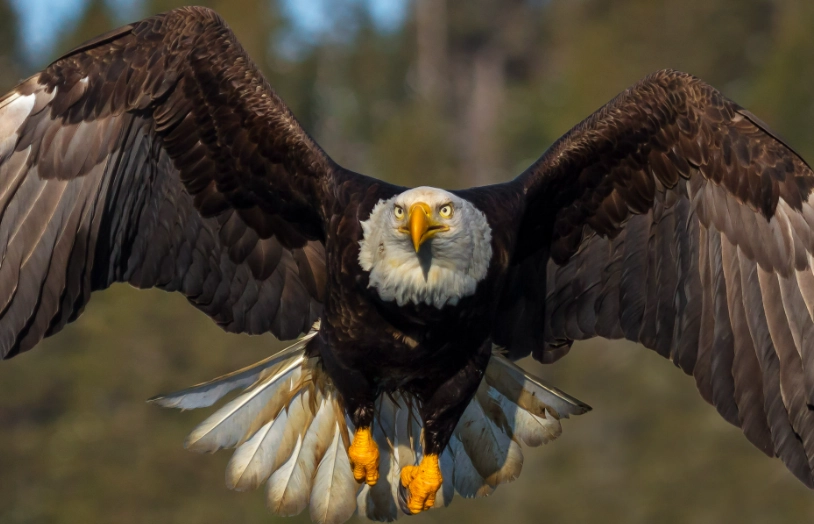
Timing is everything. Dawn and dusk are often the most active periods for movement and hunting. In winter, midday when thermals develop and the air warms up a bit is prime soaring time. Overcast days can be surprisingly good, as the flat light seems to encourage activity.
How to Photograph a Bald Eagle Flying (And Not Mess It Up)
I'll be honest, my early attempts were terrible. A gray smudge against a gray sky. Here's what I learned the hard way, so you don't have to.
Gear (It Matters, But Not as Much as You Think): A DSLR or mirrorless camera with a telephoto lens (300mm is a bare minimum; 400mm, 500mm, or more is ideal) is the standard advice. And it's good advice. But if you only have a smartphone or a point-and-shoot, your goal changes. Don't try to get the full-frame, feather-detail shot. Go for the scene. Capture the eagle in its environment—soaring over a mountain ridge, perched on a dead snag by the river. That can be just as powerful.
Camera Settings for Flight: This is crucial. Eagles move fast when they want to.
- Shutter Speed: This is your #1 priority. You need to freeze the motion. Start at 1/1000th of a second or faster. For diving eagles or active flapping, 1/2000th or higher is safer.
- Aperture: A wider aperture (like f/5.6 or f/4) lets in more light, allowing those fast shutter speeds. It also blurs the background, making the eagle pop.
- ISO: Don't be afraid to crank it up. A noisy shot is better than a blurry one. Let Auto ISO do its thing with a shutter speed minimum set.
- Focus: Use continuous autofocus (AI-Servo for Canon, AF-C for Nikon/Sony). Set your camera to use a cluster of focus points to help track the moving bird.
The Human Element: Be patient. Pre-focus on an area where you expect action, like a favorite perch or a patch of water. Watch their behavior patterns; they often use the same flight paths. And most importantly, put the camera down sometimes. Just watch. Burn the image into your memory, not just your memory card. The sight of a bald eagle flying directly toward you, filling your viewfinder, is a heart-stopping moment no photo can fully replicate.
Your Bald Eagle Flying Questions, Answered
More Than Just Watching: The Bigger Picture
Seeing a bald eagle flying free is a direct result of one of the greatest conservation success stories. The banning of DDT, strong legal protection via the Endangered Species Act and the Eagle Protection Act, and decades of work by biologists brought them back. The U.S. Fish and Wildlife Service oversees their management and monitoring.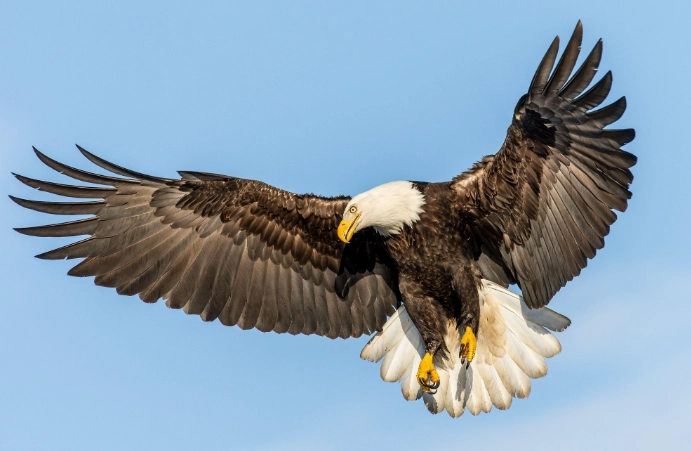
But their story isn't over. They still face threats like habitat loss, lead poisoning from ingested bullet fragments in carcasses, and collisions with vehicles and power lines. When you appreciate a bald eagle in flight, you're appreciating a survivor. Supporting organizations that protect habitats and advocate for clean water and bans on toxic lead ammunition helps ensure future generations get that same thrill.
So get out there. Find a river, a lake, a coastline. Be patient, watch the sky, and listen. Sometimes you'll hear their call before you see them—a surprisingly weak, chattering sound for such a formidable bird. Let that be your cue to look up. You might just catch that shadow passing over, that glimpse of white against the blue, that moment of pure, wild grace that makes you forget everything else. That's the magic of a bald eagle flying.
Reader Comments