My Birding Notes: Key Sections
- What Does a Hairy Woodpecker Look Like? The Ultimate ID Cheat Sheet
- Hairy Woodpecker Sound: More Than Just Drumming
- Where Do Hairy Woodpeckers Live? (Hint: They're Closer Than You Think)
- A Day in the Life: Hairy Woodpecker Behavior Unveiled
- How to Attract Hairy Woodpeckers to Your Yard: A Practical Blueprint
- Final Thoughts: Why This Common Bird is Uncommonly Cool
I remember the first time I really saw one. I mean, really saw it. For years, I'd glance at the suet feeder and think, "Oh, another Downy." It wasn't until I spent a freezing morning with my binoculars glued to my face that I noticed the difference. The beak was all wrong—too long, too formidable. That was my "aha" moment with the Hairy Woodpecker. It's a bird that lives in the shadow of its more famous, pint-sized cousin for a lot of casual watchers. But once you learn its secrets, you realize it's a powerhouse in its own right, with a personality and a set of skills that are utterly fascinating.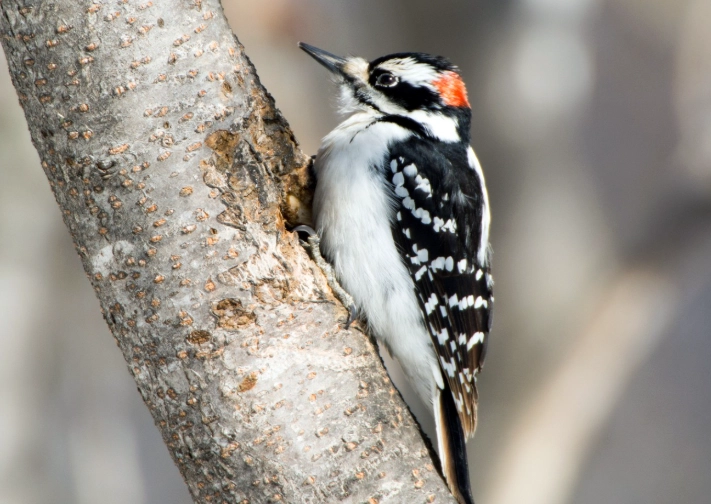
This isn't just another bird fact sheet. If you've ever been confused by a black-and-white woodpecker at your feeder, wondered what that machine-gun drumming on your gutters means, or just wanted to know more about the wild neighbors in your trees, you're in the right place. We're going deep on the Hairy Woodpecker. By the end of this, you'll not only be able to spot one from fifty yards, you'll understand what it's doing and maybe even how to convince one to stick around.
Let's start with the biggest hurdle: telling them apart.
What Does a Hairy Woodpecker Look Like? The Ultimate ID Cheat Sheet
Okay, let's be honest. The Hairy Woodpecker (Dryobates villosus, if you want to get scientific) and the Downy Woodpecker are the bird world's most infamous look-alikes. It's like nature's trick question. But the test is passable, I promise. You just need to know what to look for.
The Classic Look: Breaking Down the Basics
Picture a woodpecker-shaped bird about the size of a robin. That's your Hairy. They have that classic black-and-white checkered pattern. A broad white stripe runs right down their back—you can't miss it when they're clinging to a tree trunk. The wings are black with rows of white spots. Males sport a brilliant red patch on the back of their head, like a cool hat. Females look identical but lack that red patch; their heads are all black and white. Their underparts are mostly clean white, which really makes the bold patterns pop.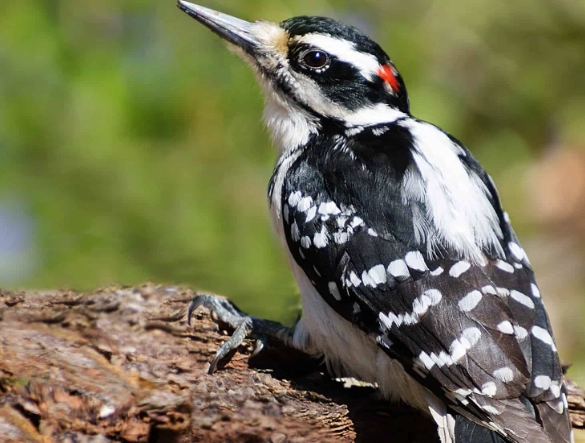
Now, here's where it gets tricky. The Downy has almost the exact same pattern. So, if you're just going by colors, you'll fail the test every time.
The Bill: Your #1 Clue (It's a Big Deal)
This is the single most reliable feature. Forget the patterns for a second and look at the face. The Hairy Woodpecker's bill is a chisel. It's nearly as long as the bird's head is wide—a stout, powerful tool for serious excavation. It looks proportional to its larger body.
The Downy's bill, in contrast, is a tiny pick. It's petite, almost dainty, shorter than the width of its head. It looks like it belongs on a smaller bird (which it does).
Think of it this way: The Hairy's bill looks like it could do some damage to a tree. The Downy's looks like it's for delicate work. Once you train your eye on the beak, the confusion starts to melt away.
Spotting the Subtleties: Plumage Variations
If you're still unsure (and lighting is bad, or the bird is facing away), there are backup clues. Look at the outer tail feathers. On a Hairy Woodpecker, they are almost always pure white, no black spots or bars. The black facial stripe behind the eye on a Hairy also doesn't usually have a spur connecting to the black on the back of the neck, though this can vary a bit by subspecies.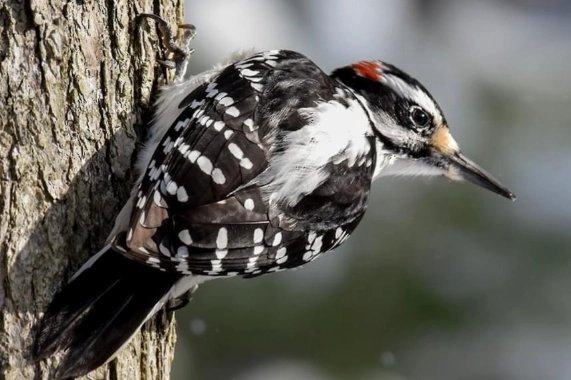
To make this crystal clear, here’s a side-by-side breakdown. Bookmark this table.
| Feature | Hairy Woodpecker | Downy Woodpecker |
|---|---|---|
| Size | Larger (~9" long, Robin-sized) | Smaller (~6.5" long, Sparrow-sized) |
| Bill | Long, robust, chisel-like. As long as head is wide. | Short, petite, pick-like. Shorter than head width. |
| Outer Tail Feathers | Usually pure white, no black markings. | Usually have small black spots or bars. |
| General Vibe | Powerful, substantial. | Delicate, nimble. |
| Call (more on this later) | Loud, sharp, piercing "PEERK!" | Softer, descending "pik" notes and a whinny. |
See? It's not magic. It's just a checklist. Next time you see one, run down this list. Bill first. Always.
Hairy Woodpecker Sound: More Than Just Drumming
If you're in the woods and hear a sudden, explosive "PEERK!" or a rapid-fire rattle that sounds like a tiny jackhammer, you've likely found a Hairy Woodpecker. Their vocalizations are as bold as their appearance.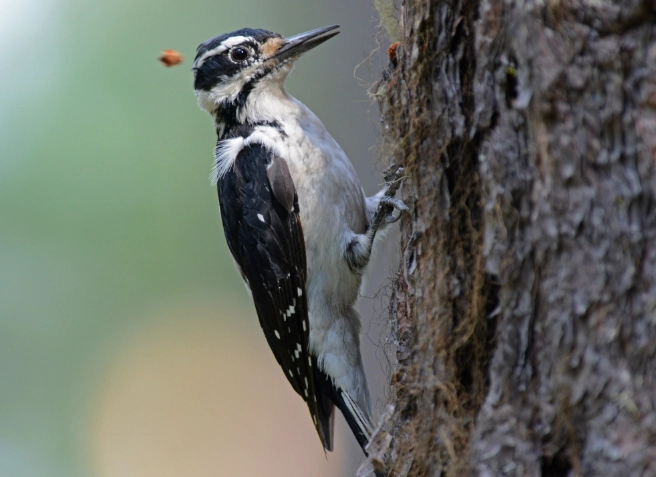
The Call: That Sharp "Peek!"
The classic Hairy Woodpecker call is a sharp, loud, single-note exclamation. Bird guides often write it as "peek" or "keek." But in the field, it feels less like a word and more like an event—a sudden punctuation mark in the forest soundscape. It's not melodic. It's declarative. It's the sound of a bird announcing its presence and maybe telling others to back off. Compared to the Downy's softer, descending series of notes, the Hairy's call is brash and attention-grabbing. You can listen to crystal-clear recordings of this signature call at the Cornell Lab of Ornithology's All About Birds page for the Hairy Woodpecker. It's an invaluable resource for training your ear.
The Drum Roll: Not Just Noise
All woodpeckers drum, but the Hairy's drum is a powerful, even roll that lasts about a second. It's not random banging. This is communication. They drum to:
- Claim territory: Saying "This patch of woods is mine!" to other Hairies.
- Attract a mate: A strong, fast drum roll is like a fitness display.
- Communicate with their partner: Mated pairs will often drum back and forth.
They'll use resonant surfaces to amplify the sound. Dead tree limbs (snags) are their favorite, but they've adapted brilliantly to human landscapes. Don't be surprised if you hear this drumming on your metal chimney cap, rain gutter, or even satellite dish. The first time I heard it on my stovepipe, I thought something was seriously broken. Nope, just a Hairy Woodpecker using my house as a megaphone.
That metallic drumming on your house isn't vandalism. It's a Hairy Woodpecker's version of posting a "For Sale" sign or sending a love letter. They just have a very loud pen.
Where Do Hairy Woodpeckers Live? (Hint: They're Closer Than You Think)
You don't need to trek into remote wilderness to find a Hairy Woodpecker. One of the things I've come to appreciate about them is their adaptability.
Preferred Habitat: Mature Forests & Beyond
Their heartland is mature forests, especially those with a good mix of living trees and standing dead trees (snags). Snags are crucial—they're the grocery stores, apartment buildings, and communication towers of the woodpecker world. Hairies need them for finding insect larvae (food) and for excavating nest cavities (homes).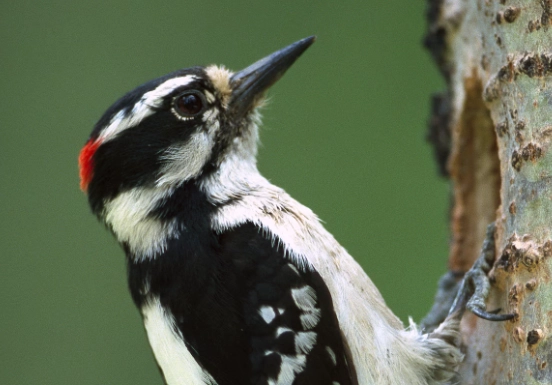
But they're not picky purists. You'll find them in:
- Forest edges and woodlots.
- Recently burned forests (which are often full of insect-rich dead wood).
- Parks and cemeteries with large trees.
- Suburban backyards, especially if you have larger trees or feed suet.
- Even along riparian corridors (river and stream banks) in more open country.
They're less common in purely urban concrete jungles than, say, a pigeon, but if there are trees of a decent size, they might give it a shot.
A Continent-Wide Resident: Range Map Insights
The Hairy Woodpecker is a true North American staple. According to range data from the U.S. Geological Survey and other biogeographic studies, their range is massive. They live year-round across almost all of Canada and the United States, from the boreal forests of Alaska right down through the pine woods of Florida and into Mexico and Central America. They're mostly non-migratory, so if you have them in your area in summer, you likely have them in winter too, which is great news for year-round birding.
The one exception might be birds living at the very northern edge of their range; some may drift south a bit in harsh winters if food is scarce, but these are irregular movements, not a true migration.
A Day in the Life: Hairy Woodpecker Behavior Unveiled
So what does a Hairy Woodpecker actually do all day? It's a mix of hard labor, careful parenting, and surprisingly complex social interactions.
The Art of Foraging: How They Find Food
This is where that mighty bill earns its keep. A Hairy Woodpecker's diet is about 75% insects and other arthropods, especially wood-boring beetle larvae (like the infamous emerald ash borer), ants, and caterpillars. The remaining 25% is plant matter: berries, nuts, seeds, and sap.
Their foraging technique is a masterclass in efficiency:
- Excavation: They use their bill like a crowbar to peel off large chunks of bark or dig deep into wood to expose hidden insect galleries. You'll often see huge flakes of bark at the base of a tree they've been working on.
- Probing: They use their long, barbed tongue (which can extend inches past the tip of their bill!) to spear and extract larvae from deep tunnels.
- Gleaning: They'll also pick insects off the surface of bark, much like a nuthatch or creeper.
In winter, when bugs are scarce, they switch heavily to seeds and suet. This is when they become regulars at backyard feeders. They love suet cakes, sunflower seeds (especially the black oil variety), and even peanuts. Watching a Hairy Woodpecker cling to a suet cage, using its stiff tail feathers as a prop, is a classic backyard birding scene.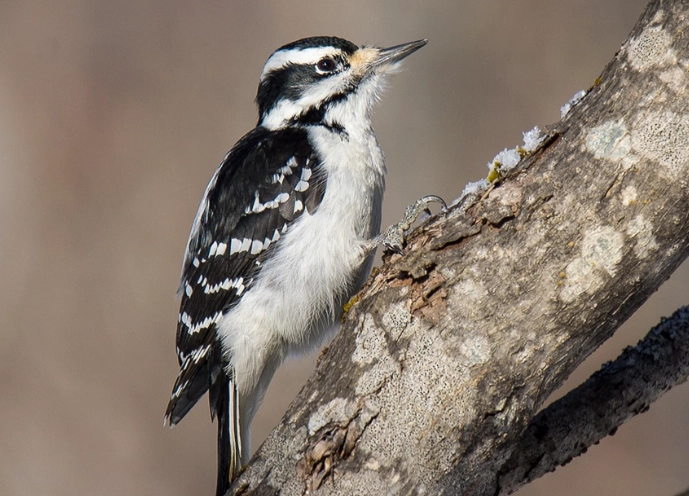
Social Life: Are They Loners or Social Butterflies?
They're somewhere in between. Outside of the breeding season, Hairy Woodpeckers are often solitary, defending a feeding territory. But they form strong, typically monogamous pair bonds that can last for several years, maybe even for life. During the breeding season, the pair works closely together.
They're also known to be... a bit grumpy. They can be dominant and aggressive at feeders, often chasing away Downy Woodpeckers, nuthatches, and even smaller squirrels. I've seen one hold a suet feeder hostage for a good ten minutes, glaring at any chickadee that dared to approach.
Nesting Secrets: From Cavity to Fledgling
Both the male and female Hairy Woodpecker share the grueling task of excavating a new nest cavity each spring. This isn't a renovation job; they start from scratch. They choose a dead tree or a dead limb on a live tree, usually 15-45 feet off the ground.
The process takes 1-3 weeks. The entrance hole is a perfect circle, about 2 inches in diameter—just big enough for them to squeeze through. Inside, they carve out a gourd-shaped chamber about 10-15 inches deep. All that wood debris just falls to the base of the tree. They don't bring in nesting material; the eggs are laid right on the wood chips at the bottom of the cavity.
The female lays 3-6 pure white eggs. Both parents take turns incubating them for about 11-12 days. Once the chicks hatch, the real work begins: non-stop feeding. Both parents are in constant motion, bringing regurgitated insects to the hungry mouths in the nest. After about 28-30 days, the young fledge. But even after leaving the nest, the juvenile Hairy Woodpeckers will follow their parents around, begging for food, for several more weeks as they learn the ropes of being a woodpecker.
It's exhausting just reading about it. Imagine doing it.
How to Attract Hairy Woodpeckers to Your Yard: A Practical Blueprint
Want to bring the show to your backyard? It's entirely possible. You're not just putting out a welcome mat; you're creating a habitat. Here’s what works, based on recommendations from the American Bird Conservancy and lots of backyard trial and error.
Food: What's on the Menu?
Offering the right food is your fastest ticket to a Hairy Woodpecker visit. They are suet fanatics. But not all suet is created equal.
| Food Type | Best Format to Offer | Why They Love It |
|---|---|---|
| Suet | Plain beef suet cakes, or blends with insects, berries, or nuts. Use a sturdy cage or log feeder. | High-fat, high-energy. Mimics insect larvae. Essential in cold weather. |
| Black Oil Sunflower Seeds | In a large hopper or platform feeder, or scattered on a stump. | Easy to hull, high in fat. A great year-round staple. |
| Peanuts (Shelled or In-Shell) | In a mesh feeder, tube feeder with large ports, or on a platform. | High in protein and fat. They'll work to crack in-shell peanuts. |
| Mealworms (Dried or Live) | In a shallow dish or specialty feeder. | Pure protein. A fantastic treat, especially during breeding season. |
A word on feeders: Hairies are strong. Get a suet cage with a tail prop—a little extension below the cage that gives their stiff tail feathers a place to brace. It makes feeding much more comfortable for them. For seed feeders, platforms or large hoppers are best; they aren't great at clinging to tiny perches on tube feeders.
Shelter & Nesting: Making Them Feel at Home
Food brings them in for a snack. Shelter and nesting sites make them stay and raise a family. The single best thing you can do is leave dead trees (snags) standing if they are not a safety hazard. A snag is a 5-star woodpecker hotel.
If you don't have a snag, consider putting up a nest box designed specifically for Hairy Woodpeckers. The specifications are critical:
- Entry Hole: 2" diameter. This is big enough for a Hairy but too small for their chief competitor for cavities, the European Starling.
- Interior Depth: 16-18" from floor to ceiling.
- Floor Dimensions: About 7"x7".
- Material: Untreated, rough-cut wood (like cedar) at least 1" thick for insulation.
- Placement: Mount it 15-25 feet high on a tree trunk or pole. Fill the bottom 3-4 inches with wood chips or shavings so they can "excavate" it.
Water & Safety: The Often-Forgotten Essentials
A bird bath is a huge attractant, especially one with a gentle drip or mister. Moving water is like a bird magnet. In winter, a heated bird bath is worth its weight in gold. All birds need to drink and bathe, even in freezing weather.
Keep your cats indoors. This isn't negotiable if you care about birds. Domestic cats are a leading cause of bird mortality. Creating a safe haven means keeping predators out.
Hairy Woodpecker FAQ: Your Top Questions, Answered
Are Hairy Woodpeckers rare?
What is the difference between a Hairy Woodpecker and a Downy Woodpecker?
Do Hairy Woodpeckers damage trees?
What time of day are they most active?
Where do they sleep at night?
Final Thoughts: Why This Common Bird is Uncommonly Cool
It's easy to take a bird like the Hairy Woodpecker for granted. It's not flashy like a Painted Bunting, nor majestic like a Bald Eagle. But that's missing the point entirely. The Hairy Woodpecker is an engineer, a pest controller, a keystone species that creates homes for other birds (like bluebirds and swallows that use their old nest cavities), and a tough, resilient survivor that thrives from the boreal forest to the suburban woodlot.
Learning to identify it confidently is more than a birding checkbox. It's a window into understanding the ecology of your local woods. That loud "PEERK!" becomes a familiar voice. That rhythmic drumming becomes a seasonal announcement. You start to notice the trees they prefer, the way they fly in an undulating pattern, the dynamic between a mated pair.
So next time you're outside, listen. Look for the black-and-white bird with the serious-looking beak. Take a moment to appreciate the sheer, chisel-powered effort of its existence. I promise, once you truly see the Hairy Woodpecker, you'll never just glance at it again.
Reader Comments